Browse Verified Midtown Offices
Leasing Office Space in Midtown, New York
What defines office space in Midtown today? Infrastructure at maximum density. Midtown remains the largest concentration of office inventory in the United States, spanning trophy Park Avenue towers, renovated Class A corridors along Sixth Avenue, and older but functional buildings east toward Third Avenue. Even as leasing patterns have evolved post-2020, Midtown office space continues to anchor finance, legal, media, and corporate headquarters activity. For companies evaluating office space in Midtown, Manhattan, the appeal is not novelty. It is certainty. Transit converges here. Clients recognize the address instantly. Expansion within the same submarket remains possible due to inventory depth. Midtown does not compete for attention. It competes on inevitability.
Midtown Overview
%25201-1.png&w=3840&q=75)
Cost of Office Space
How much does Midtown office space cost? Midtown office space typically ranges from $45–$85 per square foot annually, depending on building class and avenue positioning. Trophy towers along Park and Sixth Avenues sit at the upper end of that band, while older inventory and secondary corridors may provide relative pricing flexibility. Office space in Midtown, Manhattan rewards informed comparison. Within a five-block radius, asking rents, tenant improvement packages, and pre-built availability can shift meaningfully. The base rate rarely tells the full story. Effective rent and lease flexibility define the real economics. For tenants prioritizing brand signal and transit density, Midtown office space often justifies its premium. For value-oriented occupiers, older but well-located buildings present opportunity within the same grid. The market is layered, not monolithic.

Amenities and Restaurants
What does the workday feel like around Midtown office space? Structured and abundant. Lunch options span from quick-service counters to legacy steakhouses used for decades of client meetings. Retail corridors along Fifth and Sixth Avenue remain active throughout business hours. Bryant Park and Rockefeller Center introduce controlled open space within vertical density. Unlike residential-forward neighborhoods, Midtown does not empty at 5 p.m. Theater traffic, hospitality, and corporate overtime extend pedestrian flow into the evening. Midtown office space prioritizes availability over atmosphere. Whatever you need is within three blocks.
Commuting
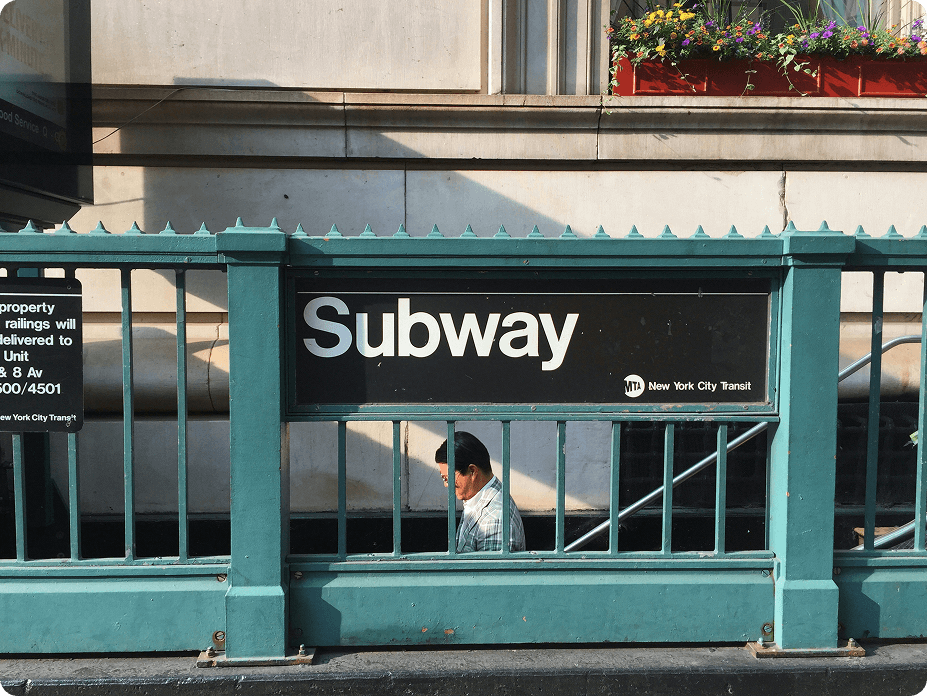
Is office space in Midtown easy for a regional workforce to access? Yes, and that remains its most durable advantage. Grand Central Terminal anchors Metro-North access from Westchester and Connecticut. Penn Station supports Long Island Rail Road and New Jersey Transit. Multiple subway lines intersect along 42nd Street, Lexington Avenue, and Sixth Avenue corridors. For distributed teams across the tri-state region, Midtown office space simplifies commute geometry in ways few other neighborhoods can replicate. Arrival feels centralized because it is.

Walkability
How walkable is Midtown office space day to day? Extremely. Blocks are compact. Cross streets connect predictably. Meetings, transit, and dining rarely require more than a five-minute walk. Pedestrian volume is high but directional. Midtown was engineered for circulation. Over time, that efficiency becomes embedded in company rhythm. You move quickly here. The city moves with you.
%25201-2.png&w=3840&q=75)
Office Density and Business Presence
Why does Midtown continue to command corporate gravity even as other submarkets evolve? Because density compounds advantage. Office space in Midtown, Manhattan sits inside the largest employment cluster in New York City. Financial institutions, global law firms, multinational headquarters, media conglomerates, and advisory firms remain concentrated within a compressed radius. Tenant turnover does not dissolve the cluster. It reshuffles within it. Midtown office space signals institutional scale. That signaling still matters in certain industries.

%25201.png&w=3840&q=75)