

Flexible Office Space in Financial District Boston
Choosing flexible office space in Boston’s Financial District involves balancing team size, budget, and desired location benefits. Many startups and growing teams seek spaces that offer both proximity to the city's core and adaptable lease terms. This area, known for its concentration of financial services and professional firms, also attracts tech companies and creative startups looking to tap into the district’s vibrant business environment.
Flexible office spaces in the Financial District tend to serve a range of companies, from solo professionals needing quiet privacy to mid-size teams requiring natural light and easy transit. Because this is Boston's central business hub, the cost often reflects the prime location, but the benefits include excellent transit access and a dynamic professional atmosphere.
Tandem’s platform helps founders navigate these tradeoffs and timing challenges, reducing friction in a fragmented office search.
Below are several flexible office options available in Downtown Boston that illustrate the variety of spaces suited to different team sizes and budgets.
Modern Downtown Office with High Ceilings
.webp)
- Address: 99 High St, Partial 17th Floor, Suite 1702, Boston, MA, 02110
- Space type: Fully private office suite
- Pricing: Est: $24,271/mo
Bright Private Office Near Downtown Crossing
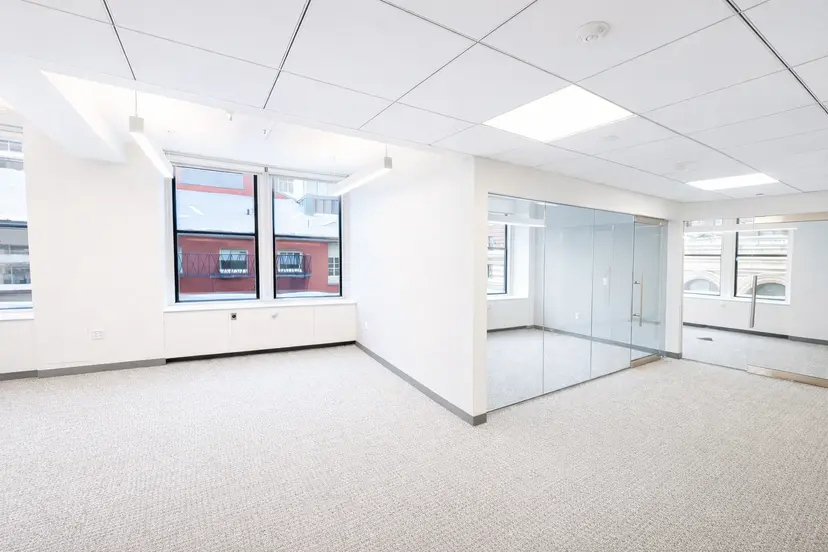
- Address: 15 Broad St, Partial 3rd Floor, Boston, MA, 02109
- Space type: Fully private office suite
- Pricing: Est: $17,400/mo
Stylish Private Office in Boston
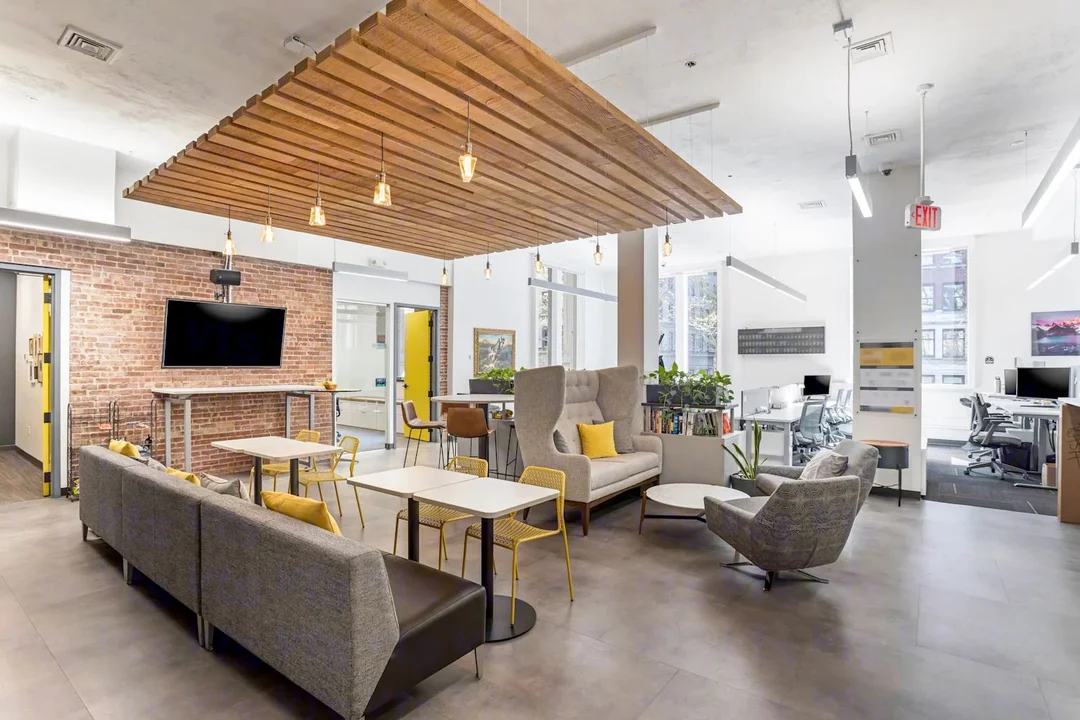
- Address: 45 School St, Suite 201, Boston, MA, 02108
- Space type: Fully private office suite
- Pricing: Est: $23,408/mo
Key Features, Pricing, and Location Advantages of Top Flexible Offices
The Financial District’s flexible offices serve a wide variety of team sizes and budgets. Pricing tends to range from around $1,000 per month for small private offices up to over $20,000 for larger layouts suited for 30 to 40+ people.
- Small offices (1–5 people) offer intimate, private spaces that prioritize quiet and affordability. Month-to-month leases provide flexibility for early-stage teams or solo professionals.
- Mid-size spaces (16–24 people) provide modern layouts with natural light, suited for burgeoning teams needing more collaboration space. Longer-term leases of 36 months tend to offer cost stability.
- Larger offices (35–42 people) combine classic architectural charm with flexible lease terms and prime proximity to key transit hubs. These spaces fit established teams preparing for growth or needing distinct branding and comfort.
- Shared or coworking options with private rooms offer community access and are particularly attractive to early startups that want private offices combined with networking opportunities and ease of access.
Transit access is a common advantage across these spaces. Locations near Park Street, Downtown Crossing, and Government Center stations put teams within easy reach of the entire city. This makes commuting straightforward and draws companies wanting to be at the heart of Boston's business life.
Comparing Flexible Office Spaces in Downtown Boston
Choosing the right flexible office space depends on your team’s immediate and anticipated needs. Here are some comparative considerations:
- Team size fit: Smaller offices focus on privacy and quiet, best for 1–5 people. Mid-sized and larger offices provide more amenities, meeting rooms, and space to accommodate growth.
- Lease terms: Shorter month-to-month leases are common for very small teams or startups. Larger spaces often involve longer commitments but provide stability and more customization.
- Price per square foot: Expect to pay more for prime Financial District locations. Smaller spaces tend to be more cost-effective per person but might lack expanded amenities.
- Location convenience: All listed offices benefit from proximity to Boston’s transit core, but spaces closer to multiple stations improve access and client convenience.
- Style and amenities: Some offices offer modern design with natural light, others blend historic charm with updated tech — your preference for environment and culture should guide your choice.
Pro tip: Consider future growth when selecting space. Underestimating office size needs is common, and it’s often cheaper to secure a slightly larger space upfront than scramble for new options later.
How to Choose the Best Flexible Office Space in Financial District Boston
Deciding on flexible office space requires evaluating your team’s size, budget, and work style.
- Location and client access: Prioritize commute ease for a geographically distributed team and consider whether proximity to clients or access to multiple meeting rooms is important for your workflow.
- Lease flexibility vs. cost: Weigh the tradeoff between shorter-term agreements and pricing, as month-to-month leases provide agility but often come at a premium.
- Amenities and work environment: Choose a space that supports productivity and culture, whether through natural light, thoughtful design, or distinctive architectural character.
To help manage the complexities in selecting and securing the right lease among many options, consider exploring how Tandem helps operationally to simplify your office search and lease decision process.